Saturday, December 14, 2013

The Book Thief - Film Version

I am struggling to describe my reaction to finally seeing this film last night. At this exact moment I was in a movie theater about an hour or so into the film version of The Book Thief. I originally wanted to see this with my mother but we ended up running out of time when Scott and I were there for Thanksgiving. This film has gotten some negative reviews from critics. Many cite it as being somewhat cheesy with beautiful imagery but a lack of depth. I disagree. I find this film incredibly enchanting and charming. It is funny without being overly so. It's a subtle sort of humor that keeps viewers engaged but it's just enough to offset the darkness of the situation. Liesel Meminger is a young girl who steals books. Her mother was a communist who gave her up to keep her alive. Liesel's foster parents become her whole world and in the film we can see that her "mama" who was so harsh in the book truly has a soft heart and a loving nature. What the film teaches us is the theme from the novel - words have power. 


Liesel makes a friend in the neighbor boy, Rudy, despite her lack of social skills. Rudy is always there to support her, save her, and understand her in times when no one else does. Liesel's papa, Hans, teaches her how to read and creates a word wall in the basement where Liesel can keep track of words she doesn't know in her own life-sized dictionary. It is when they take in a Jew that Liesel starts to grow up. Through Max, their hidden Jew, Liesel discovers the power of words and writing. She learns how well-thought-out descriptions of the weather can change someone's life when they can't see the outside for themselves. She learns how to calm down her fellow Germans in a bomb shelter in the middle of the night through the telling of a story. And she records her own experiences to give merit to the crumbling world around her. She is afraid of losing the people the loves but she is strong enough to hold on even when all is lost. Death, our narrator, admires her. 


The film has beautiful imagery. The images we see, the cinematography, is crisp and very German - particularly when we see the differences between Liesel's house and the mayor's house. When we see the snow-covered streets and then the bombed aftermath ... every image is transcendent. The young actors seem so innocent which makes their offhanded remarks so much more interesting. I love how this tells the story of Nazi Germany from a child's perspective and does so very well. This is an expose into one of the darkest moments of human history through the eyes of a child. This is similar to film such as The Boy in the Striped Pajamas and even Pan's Labyrinth to a certain extent. This one goes a little bit deeper because it's a girl living a double life. She has a secret identity ... that of the book thief. If someone were to find out what she believes and who she really is her future could be extremely fatal. If she lets her secret slip she could put her entire family into danger. But as Liesel soon comes to realize Germany is not everything she had thought it was. She soon realizes the very real implications of the words of the powerful as they condemn Jews, non-Christians, and Communists ... like her mother. This is the story of a young girl who has to grow up much too fast in order to survive in a world where a word against Hitler could mean death. Her sense of humanity runs so deep inside of her that she fights against him (Hitler) and constitutes how she grows up into a woman. Children cannot just be brainwashed into believing whatever you tell them ... children have the capacity to question what they're told and have the courage and bravery to stand up to some of the most powerful systems to ever have existed. Between Rudy wanting to celebrate the power of the black Olympian, Jesse Owens to Liesel loving the Jew in her basement with all of her heart ... these children are defying the entire Third Reich just by believing in their hearts that what Hitler is doing is wrong. They must fight between their public selves and their private ones. 
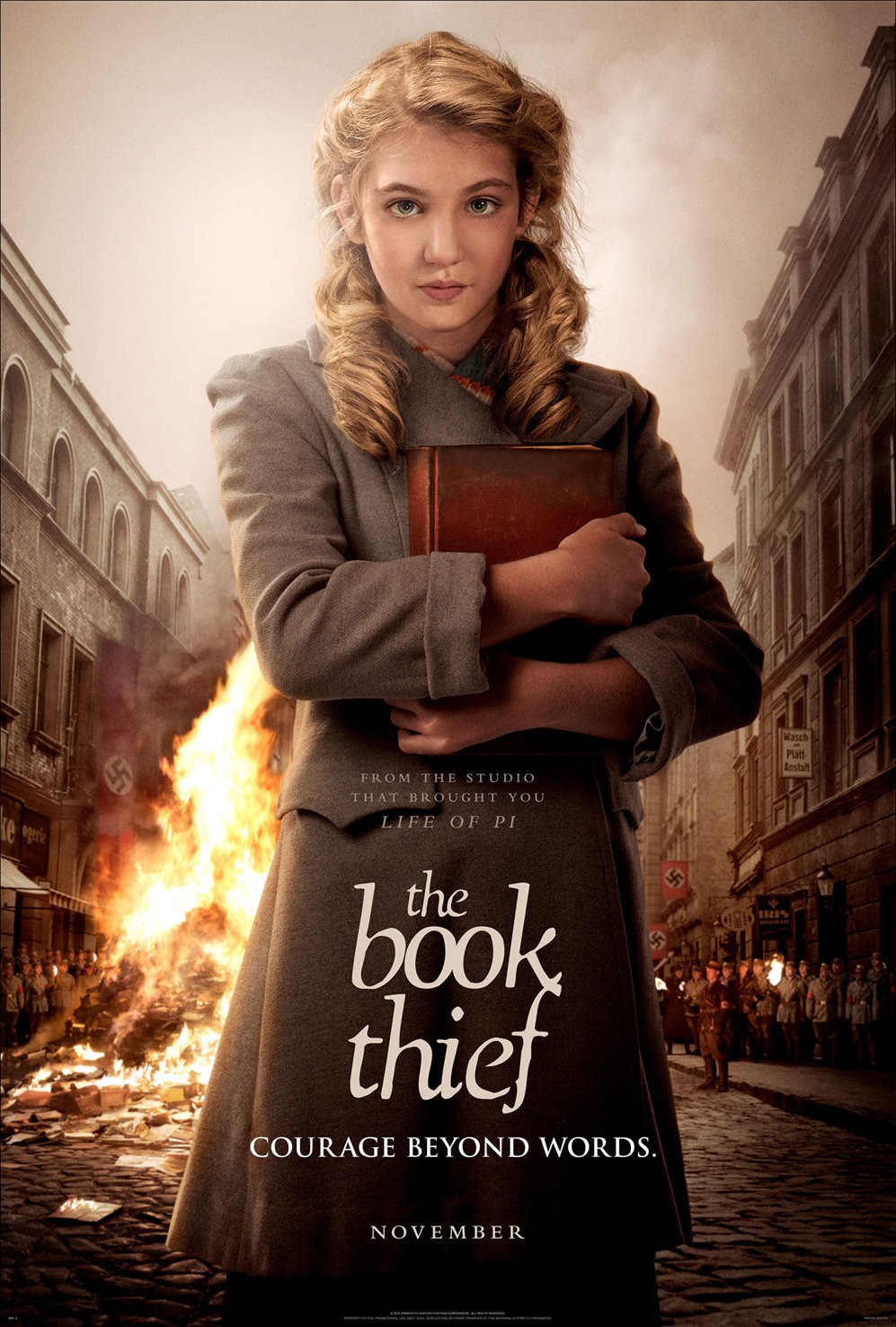
What sets Liesel apart in this film is that when she sees the Jews being marched through the town square for the first time she doesn't care if she's killed or beaten. She isn't afraid of death or an S.S. officer. No one scares her. She wants to know if anyone has heard of her Jewish friend and how he's doing. She doesn't care about who it exposes ... she cares about humanity. 

The movie at time can be sappy. It is a tidbit too long. But ultimately it a story through a child's eyes and it is meant to make you feel something. If you ignore the sometimes cheesiness of the film it can be deeply meaningful. This story is not so much about her stealing books but it is about a young woman willing to defy all odds to gain a stronger sense of who she is. Stealing books helped her gain confidence in her intelligence and in her desire to make a difference that was probably already always there inside of her. I would say that if you enjoyed the book you will enjoy this film. Accept it for what it is ... a story of fighting "wrong" and celebrating the little things in life - like the way the sun feels and the colors of the sky - and recognizing that all people should be treated equal because having the ability to understand words gives you the power to fight evil.

Wednesday, November 27, 2013

Good News and Happy Holidays!


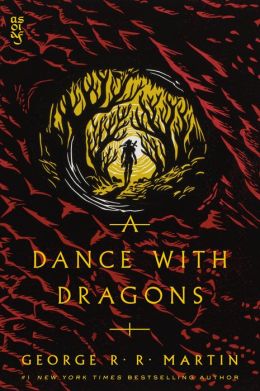
I am spending my Wednesday off of school reading the fifth book in the "Game of Thrones" series, A Dance with Dragons. I bought the hardcover version and the book weighs a ton in comparison to most books I read and I feel as though my arms are getting a workout from holding it up. The good news is so far this may be my favorite of the series, although I'm only on page 122 out of 959 so admittedly I've got a ways to go. I don't feel like this should be a problem though as I anticipate my upcoming 12 hour drive to Minnesota and then the following 12 hour drive back to Oklahoma City. I can't express how uplifted I feel right now. Everything is mostly packed and awaiting Scott's return so we can begin our journey, I'm reading a a tome of a book that's not only keeping me entertained but also relaxed and quite content, and finally the sun is shining through my blinds beautifully and casting such a warm and inviting light. My dog is anxious as he sees our things are packed, but he almost always does well on this long and tedious trips back home. Even better tomorrow is Thanksgiving and I'm looking forward to seeing my brother, his wife, and especially my nephew. I get to hug my mom and see my dad and my aunt. I can eat delicious food and relax with my big book and my loved ones around me, as well as a stack of papers to be graded in my backpack that I will most likely ignore. On Saturday we travel to Welcome to see Scott's family and have Thanksgiving (round 2). I will be making the green bean casserole for our Thanksgiving and Scott's making the stuffing/dressing stuff. It's a good week and I feel blessed.

The other good news is that our school's awesome librarian as acquired Number the Stars for us! We have a class set that we can share and finally we can get our fifth grade kiddos into an actual novel instead of our dreary and tired textbook that features short stories that no one really cares about. This is one of my favorite young adult novels and I think our kids will really benefit from reading it. The best way for our kids to enhance their reading skills is to ... wait for it ... ACTUALLY READ A BOOK! This makes me so happy and I feel like we can finally push our kids to become lifelong readers who not only master skills that a test dictates they know, but skills they can use for life. I am thankful for my students and my colleagues who support me. I am thankful for my family who drive me crazy but comfort me in ways I have yet to find elsewhere. I am thankful for Scott - the man I love more than anything in this world - my partner, my love, my joy, my pain-in-the-butt. I am thankful for my dog who annoys me and teaches me patience and forgiveness. I'm thankful for my nephew ... a person so young with so much potential, and I love seeing life through his eyes. I am finally thankful for books. Pages with words that come together to ignite my imagination, develop my mind, and transform me as a person. Happy Thanksgiving everyone!
Keep reading and love to you all,

Britt

P.S. It might take me a while to update you on some new books because A Dance with Dragons will most likely suck up a lot of my time. Following this epic novel, however, I will be reading the sequel to The Strangely Beautiful Tale of Miss Percy Parker.  

Sunday, November 24, 2013

Hunger Games: Mockingjay

In an unspecified time in America's future exists a new country called Panem. This is a dystopian society that is cruel, vengeful, violent, paranoid, and ruthless. In this third book, Katniss is trying to reconcile what the people around her want as opposed to what she wants herself. District 13 and rebel leaders want her to be their mockingjay - the tour de force behind their revolution. This third novel in the Hunger Games trilogy takes a dark turn as our characters are out of the arena but they're still in the Games. Only now the games are real and taking on too many innocent causalities and throwing Katniss's mental health into a tailspin. 


At first we think that Peeta is still trying to keep her alive, despite his being captured by the Capitol and most likely tortured. Then we learn that their relationship is about to become extremely rocky as the once docile Peeta is now deranged and confused and inundated with tracker jacker venom and distorted memories. Whatever remains of District 12 is ash and corpse-riddled and the book takes on a crazy quality of Depression-era peasant towns, surrealistic Capitol freak-shows, and the very futuristic underground District 13. Reading this book made me draw connections between Panem and the films, The Island or Logan's Run. People trying to survive in uncertain circumstances and in worlds with different rules. In The Island the perfect people underground are fooled into thinking they will someday get chosen to go "The Island," a perfect society where they will live the rest of their lives in paradise. In reality they are insurance policies and when they go to "The Island" they are actually most likely having their organs harvested for the real version of themselves. In Mockingjay the "soldiers" of District 13 are hoping that they serve a purpose - to overtake the Capitol and create a better world, but oftentimes the truth of that is fuzzy and particularly for Katniss, it's hard to trust the rebel President who sometimes holds the same sadistic and inhuman tendencies as the Capitol's President Snow. 

"They have nutrition down to a science. You leave with enough calories to take you to the next meal, no more, no less. Serving size is based on your age, height, body type, health, and amount of physical labor required by your schedule." A life in District 13 is really no life at all ... you are a pawn in a much bigger game played by more important people. Power is dangerous in Panem. Soldier Katniss Everdeen struggles with the strict rules of her new home, and "in some ways, District 13 is even more controlling than the Capitol," which is why in the end she must determine which power-holder needs to be brought down for the world to truly become a better place. 

In my opinion, this third book alludes to the forceful hint that if we (today in 2013) don't get our shit together ... if we don't stop the constant wars and fix our broken planet ... the world of the Hunger Games might not be fiction anymore. In this third book, Snow continues to try and unhinge Katniss and play with her emotions, Katniss slowly learns who to trust and who to love, and eventually realizes that all along she needed to have trusted and loved herself more. In the end my only criticism to this final piece in the Games is that it ends and I had a huge urge to know more. How is she surviving, how does Panem rebuild itself, and what is the new government like? Have things gotten better and how is she faring? Does District 12 become alive again or remain just a place that once was? The epilogue is only a couple pages and I want more.


I still feel like this not a book for fifth graders - or at least my fifth graders. I think that some elite-reading sixth graders could maybe grasp it in its entirety, and most likely 7th grade and up will love the series, but I don't want the book's themes and concepts of political and social import to go unnoticed or unheeded by our youth. It would be a great novel for a class book study, as I think we could really push our students' thinking about current events with this paradigm of humanity. 

This book had one moral lesson that I have seen in other books, movies, and real life experiences .. and a lesson that should be a constant staple in our education as people "Those who cannot remember the past are condemned to repeat it." 

In the end Katniss does the bravest thing she can - she stops the past from being repeated. "I no longer feel any allegiance to these monsters called human beings, despise being one myself. I think that Peeta was onto something about us destroying one another and letting some decent species take over. Because something is significantly wrong with a creature that sacrifices its children's lives to settle its differences." 

Read this book. Read it with your children. Talk to your children about what they think. Push them to think deeper and draw connections between the injustices in this world and the injustices in ours. I'm not saying make your kids read this book to become the next martyr for humanity, but let your kids not that doing the right thing is almost never easy, but it is necessary.


Saturday, November 23, 2013

The Hunger Games: Catching Fire

I finished with Catching Fire, the second book in The Hunger Games series on Thursday night, and I am now halfway through the third book. 

In the aftermath of the Games Katniss tries to be herself but she can't. The ease between her and her "cousin" Gale is gone and any chance of them getting those feelings back is futile. Gale is now working in the mines and Katniss is rich and relocated to the Victor's Village with her family in a fancy house that she neither wants nor cares for. Then there's the issue of her and Peeta and the stunt they pulled with the berries at the end of their Hunger Games. Now the Capitol is in danger of a revolt with Katniss at the heart of their rebellion - they viewed her final act in the Games as an act of defiance, and that makes President Snow pretty cranky. 

As Collins explores war and violence with our youth, Katniss takes center stage as not only a girl on fire but a girl seemingly damaged by it. Her romance with Peeta in the Games was their key strategy but now it has become something more permanent as they will have to once again present themselves as lovers to the world, and this makes her chest tighten and presents nothing but pain for Gale. President Snow despises Katniss and always will and is disbelieving of the ruse that her love for Peeta is real. Katniss "outsmarted his sadistic Hunger Games, made the Capitol look foolish, and consequently undermined his control." She had the audacity to challenge the Capitol's decree that only one victor could survive and now she has put herself and those she loves in danger. Snow challenges Katniss to prove her love for Peeta and quell the sensationalism rising about her coincidental rebellion. She is not a fan of ambiguous threats. She is chilled and elated at the thought of uprisings. But more than anything she learns that she is the spark that could lead to an inferno. She is the spark that makes all the districts catch on fire. She is singularly taking down the Capitol without meaning to. And as we learn in the third book, she is becoming Panem's mockingjay. 

In this second book we spend about two-thirds of it commiserating with her as her fake love affair seals her fate. We get more ensconced in the injustice of her world and her situation. We grow up with her as she slowly finds the courage to stand up. "Prim ... Rue ... aren't they the very reason I have to try and fight? Because what has been done to them is so wrong, so beyond justification, so evil that there is no choice? Because no one has the right to treat them as they have been treated? Yes. This is the thing to remember when fear threatens to swallow me up." Courage leads to opportunities. The only way to overcome injustice is to fight and that could mean the difference between survival, freedom, and slavery. 

Katniss faces confusion, debates running away, considers starting a revolt in District 12, but all her musings are cut short as it is announced that in the 75th Hunger Games she will be fighting again - with Peeta and other victors from previous years. This is basically a disgusting attempt to kill Katniss without making it look like the Capitol's sole responsibility. It is an opportunity for President Snow to remind Panem that even the victors are not above the Capitol - that even the victors can and will be humbled. It is a reminder that no one can beat the system. Once she gets thrown back into the preparations for the arena she faces countless speed bumps sent to her by President Snow to discombobulate her, to disorient her, to unnerve her. In this book the Games, to me, did not have as much weight to them as they did in the first book. They didn't feel as real, as scary, or as descriptive to me. There was not as much depth or seriousness carried with this Hunger Games. At times it was almost comical ... it felt like a farce and ... it was a farce, as we find out in the end. The entire time most of the tributes were faking their sincerity in the arena because behind the attempt to bring them all down to their knees (to bring them to their deaths), most of the tributes had their own agenda. 

This book is the end of one era and the start of a new one - the start of a war - a whole new kind of Hunger Games. Katniss is our symbol of hope. Of challenge. She is our mockingjay. This book did not disappoint me. I loved the focus on her aftermath once she survives her first experience in the arena. It was nice to see her try to adjust to the world after "victory." It was inspiring to get pulled into her fear and simultaneous bravery. And it was excruciating to experience her frustrations and losses, but once she hit that ridiculous arena it was all I could do root for her to win, hope that she would also save Peeta, and steady myself for the future as the new fight begins. In book three she has a whole new battle to fight - the battle against an unjust government and the many personal battles she'll have to fight with herself and the people around her that she loves. This is a great series and I feel stupid for not buying into them sooner. I look forward to seeing the second film this weekend. 

Sunday, November 17, 2013

The Hunger Games

I have finally read The Hunger Games by Suzanne Collins and I must report it is a truly excellent and fantastic book. It does remind me a lot of The Selection, although again instead of brutally fighting others to the death (a game of survival), The Selection is about fighting others for "love" or a chance at a better life. However, both books are about a televised and highly political game that could mean a chance at a new life for those who suffer from poverty and hunger. 

As a teacher I must comment on how this young adult novel makes me nervous when I think about the age group and sophistication levels of my students who I see reading this series. I found many parts of it to not be inappropriate per se, but rather I don't see how my students in particular can fathom the political implications of the book and understand the gravity of the situation these different district members find themselves in. The book is really quite dark and calculating and shows the discontent between a people and their government. When I have my own children I don't feel like I would keep them from reading this book, but I'd want to discuss it with them and have them dive into analyzing what the book is truly about. For some of my kids who are anywhere from 2 years or more behind in their reading level, I wonder if they can truly grasp the plot or if it simply goes above their head. 

For some kids this book might be exciting as it is action-packed and filled with violence. The love affair between Katniss and Peeta is superficial so that doesn't pack many thrills - it's more of a necessity for the two tributes to survive and you can tell that Katniss, our heroine, is confused as to where her true romantic feelings lie. I have found that children love violence ... they like to hear about it in history and read about it in books or play it out in video games and relish its grotesqueness in movies. I would want to push parents who let their kids (particularly their middle school children) read this series to have those discussions with your kids about what's really going on and what it would be like to live in a revamped United States where every district is at the mercy of the Capitol. For me, I could tell that the author, Suzanne Collins, has a negative bias toward her fictionalized Capitol. She fuels her main characters with a hatred for the Capitol where the people have everything and punish the 12 districts by putting on the Hunger Games every year where they take children away from their families and humiliate the districts by treating this bloodbath as a festivity. I like the message she's trying to convey but I wonder if our middle school kids will get that message or just become infatuated with the spears and swords and mutated beasts. Let's dig deeper! 

Having seen the movie before reading the book I was quite pleased with both versions (I found them to be pretty similar). I'm excited to see the second movie, but I will be reading the book beforehand. At times I felt bummed out reading this excellent story in that I already knew the ending and the twists and turns that would have normally kept me alert and intrigued. There is something to be said though in that while I could anticipate the plot (having seen the film) I still read the first 100 pages in an hour on a school night. The book is highly engaging. As I said before it is also incredibly sophisticated and I appreciate the author's zeal in exposing the harshness and cruelty of this world - I only hope it continues as the series goes on. I want more rebellion, more fights for equality ... I want our children who read this book to note how the world of Katniss Everdeen is unfair, but that it's possible to fight back against an unfair world even though the cost may be great. 

I think these books have a lot to teach and I want them to be explored vigilantly. "Taking the kids from our districts, forcing them to kill one another while we watch - this is the Capitol's way of reminding us how totally we are at their mercy. How little chance we would stand of surviving another rebellion. Whatever words they use, the real message is clear. 'Look how we take your children and sacrifice them and there's nothing you can do. If you lift a finger, we will destroy every last one of you. Just like we did in District Thirteen." District Thirteen was obliterated in the last rebellion the districts had against the Capitol. Let this story be a foreshadowing though, I hope, of a young girl who will rally those around her to fight again for equality and harmony that currently does not exist in their somber world. 

This story is fun, exciting, intellectually charged, political, (better than TV's 'Survivor'), beautiful, and poignant. I'm exciting to read Book Two. 


Thursday, November 14, 2013

Addition to The Maid's Version

Need I mention that The Maid's Version was a four year anniversary gift to me from Scott? Books are the best gifts.

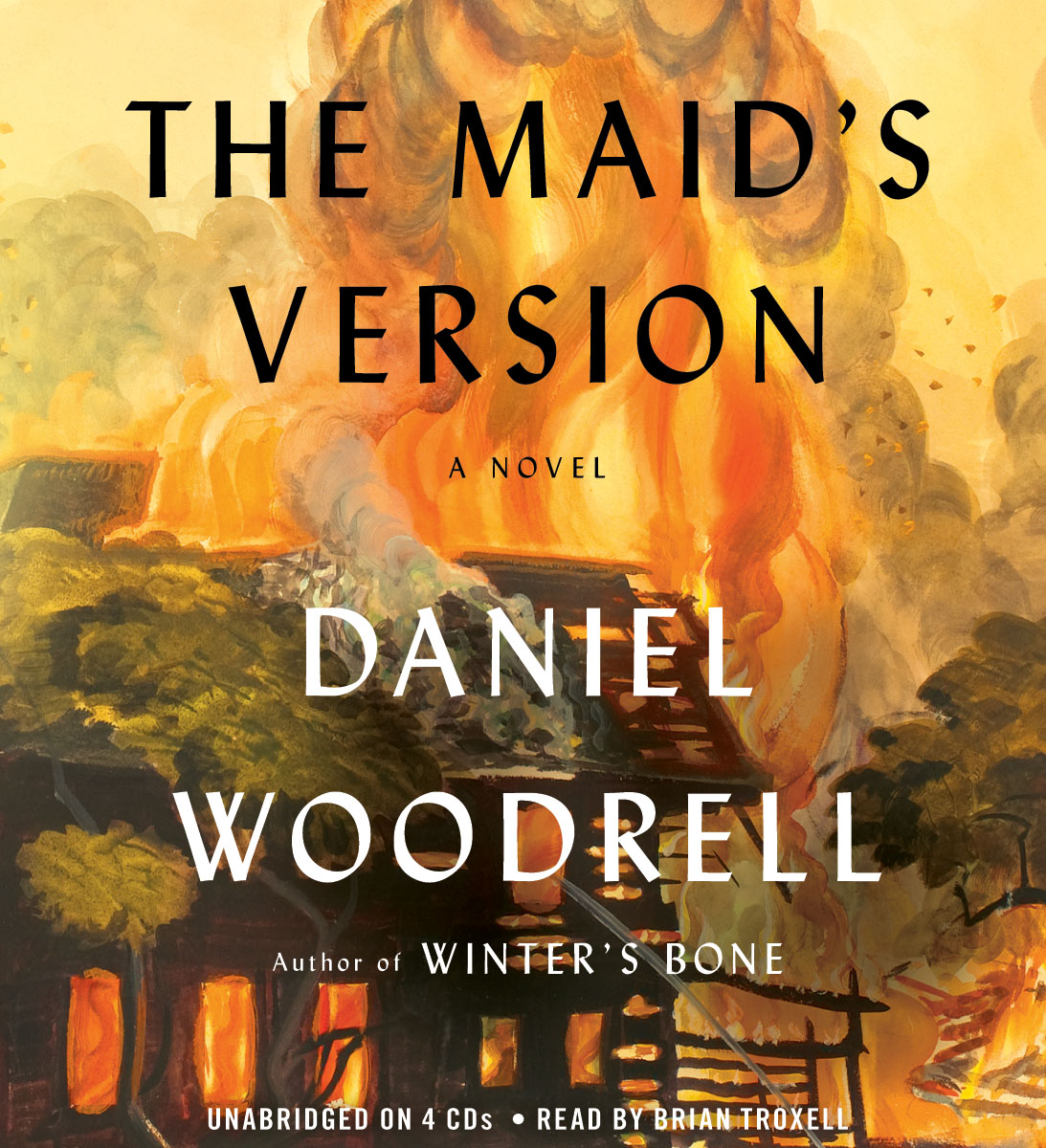
The Maid's Version

The Maid's Version by Daniel Woodrell is the maid's version not told by the maid. Here is an extremely short novel (around 160 pages) that is best read in one sitting if at all possible. I did not read it in one sitting and I sincerely wish I would have. The novel is sophisticated and almost poetic in its telling. 


Alma is a strong woman who scares her grandson who eventually becomes to one to tell her story. Alma's theories and obsessive tendencies have led to a rift between herself and her son, and we find out bits and pieces of what caused this alienation between the two later on throughout the book. The book finally culminates in revealing the truth behind Alma's theory and we can feel satiated and freed from the restlessness we get from the format of the book. 

The theories and obsessions of Alma are all relating to a dance hall explosion that killed her scandalous but beloved younger sister and countless others who were just out having a good time. The question the book poses is "who did it?" and "why did it happen?" Alma's theories hinge on one of her sister's torrid love affairs with an affluent member of society. Whereas Alma's low station in life as a maid whose family is severely poverty-stricken make her more irked at the supposed ease of those she works for, the truth is that those with money and power are actually the more guilt-ridden and miserable members of the Ozarks society. 

Alma's son, John Paul, is not close to his mother and often shuns her and tries to keep his own son from being moved by his grandmother. Unfortunately, Alek, John Paul's son, originally frightened of his eccentric grandmother, becomes intrigued by her story and the stories of his father's family. Finally his father in a weakened state of recognition and acceptance puts a shaky hand on his son and says "Tell it. Go on and tell it." And so we start to hear the story of the Dunahew's, particularly Alma and her three sons, as well as her now dead sister who she grieves over doggedly. 

Alma hated that she fed another man's children before she fed her own. On page 18 of this brilliantly poetic novel we get an overbearing sense of the class and socioeconomic issues that face Alma and those like her. We blatantly see the class discrepancies as Alma is forced to hide her employers' leftovers to bring home so her children can eat their scraps. Life in the Ozarks is not glorious and it is mentioned a couple times (or hinted at) that those on the bottom of the barrel must constantly work to earn whatever little they can. Alma was a mother-figure to her younger sister Ruby, a girl described as a woman who had known "poverty from birth but been blessed with pizzazz and understood early that life was a fight and she couldn't win even one round if she kept her best hand tied behind her back." She made her 'living' from loving men and discarding them when they bored her. Unfortunately the brute that she fell in love with was Alma's employer, and a man who Alma comes to abhor for what she believes to be his crimes. Alma's poisoned mind against this man comes to poison the minds of a few of her family members as well. The question comes to be throughout the novel ... was it this man who blew up the building that Ruby was in or was it one of the other unsavory and sometimes down-and-out characters of the small Ozarks town? 


Once the disaster itself struck, the town came together in its grief. "The town was represented from high to low, the disaster spared no class or faith, cut into every neighborhood and congregation, spread sadness with an indifferent aim." At this point people of different classes come together, sing hymns, and Arthur Glencross, Alma's employer, sits his family next to hers in a gesture she'll never forget, but soon her suspicion of him will lose her her job with his family and her reputation in the town. 

The town of West Table where she lived would grow tired of her accusations and her scorn, and so would her son, John Paul. After the loss of her two other children, the only one she had left to her would forsake her for the love of others who took him in when she was lost. She was "considered to have become crazy, her brain turned to diseased meat by the unchecked spread of suspicion amidst a while simmering and reckless hostility, a caustic sickness ..." When Alma was deemed uncivilized and crazed enough to be sent to a work farm, her son John Paul was abandoned and his anger and fierce determination became his only way to survive. John Paul's son is the one who recounts his family's tales and the other laments of the poor is this nonlinear story told to us in fragmented snapshots. The book reads as a million puzzle pieces thrown in the air, only to somewhat come together in the end. 

The Maid's Version pulled me into a world I was not used to and into a town drenched in disaster which caused the unraveling of a woman who was once strong and unwavering. I would suggest it, but for myself it might call for a second read so I can gather the stories and details that I missed the first time around. This, as I mentioned earlier, is a very sophisticated piece of writing. You can tell that Mr. Woodrell has an incredible amount of skill, charm, sorrow and passion in his heart to write such a story, although I would not consider this to be a story. It is a retelling - an outpouring of the heart and a cleansing of the soul. It reminds me of the somewhat off-kilter book Me and the Devil by Nick Tosches ... although I kind of hated that book it also did not really tell a story with a clear beginning, middle, end and complete with a climax and rising/falling action. This book has no rising or falling action ... it just is. The disaster happened and we're left with figuring out those who were involved with it and those whose last moments disappeared inside a dance hall. 

This struck me while I was reading it as a book that I would have read in college, or maybe in one of my literature classes I took in high school for college credit. It is full of passages and themes to be analyzed and would have fit in my disasters class in sociology at Augsburg College. In my disasters class we read a book called Everything In Its Path by Kai T. Erikson. In my opinion, it is the true story version of what happened to the people in The Maid's Version. In The Maid's Version a small town riddled with poverty is deeply affected by a dance hall explosion killing so many loved ones and leaving those behind with unanswered questions and longstanding frustrations. In Everything In Its Path we hear the true accounts of the destruction of community in the Buffalo Creek Flood. The back of the book describes it as this: 

"On February 26, 1972, 132 million gallons of coal-black water mixed with solid mine wastes burst through a makeshift dam and roared down the Buffalo Creek, a narrow mountain hollow in West Virginia. One hundred twenty-five people were killed, and 4,000 out of the local population of 5,000 lost their homes. In the months and years that followed, the survivors of the flood experiences both a form of trauma induced by the disaster itself and a form of trauma that resulted from the loss of a tightly knit, nourishing community." 


I would suggest if you're in the mood for a sociological novel that analyzes a real natural disaster, this might be a good accompaniment to the fictionalized tale of a disaster wrought by mankind in The Maid's Version. 

Buffalo Creek Flood Disaster

I would recommend this novel as it puzzled and enchanted me in the most depressing and grievous way. Daniel Woodrell, the author, also wrote the acclaimed novel Winter's Bone, which was turned into a film and starred Jennifer Lawrence. It was nominated for four Academy Awards. I'm supremely tempted to compare this fragmented novel to his others, and so Winter's Bone is not only now a film which I must see, but also another book I must add to my list. 

The Maid's Version harassed me, tormented me, and was captivating and marvelous. It is a dark story, simple in all reality, but filled with such complexities that my mind was boggled at the story snippets I was receiving page by page. Although it is a small book it packs a big punch with unparalleled relief at the end as it simply does just that ... it ends - with no fluff afterward, just the truth. At times I felt empty only to feel Alma's behavior become vindicated at the end.  

Up next I'm debating between starting the Hunger Games trilogy and whipping through them quickly with delicious zest or diving into a book recommended to me by Scott's mother, Jody, called Orphan Train. I'll let you know my choice soon. Also ... isn't fall just the best time to read books? Simply the best. 

Keep reading!