Friday, October 18, 2013

The Silent Wife

Is The Silent Wife by A.S.A. Harrison indeed better than Gillian Flynn's Gone Girl? This is the question I posed to myself as I read based on the quote by Sophie Hannah, author of The Other Woman's House. Hannah put out there that this novel was a "must read," and other critics called it "deliciously wicked" and "a chilling portrait of a relationship gone terribly awry." 
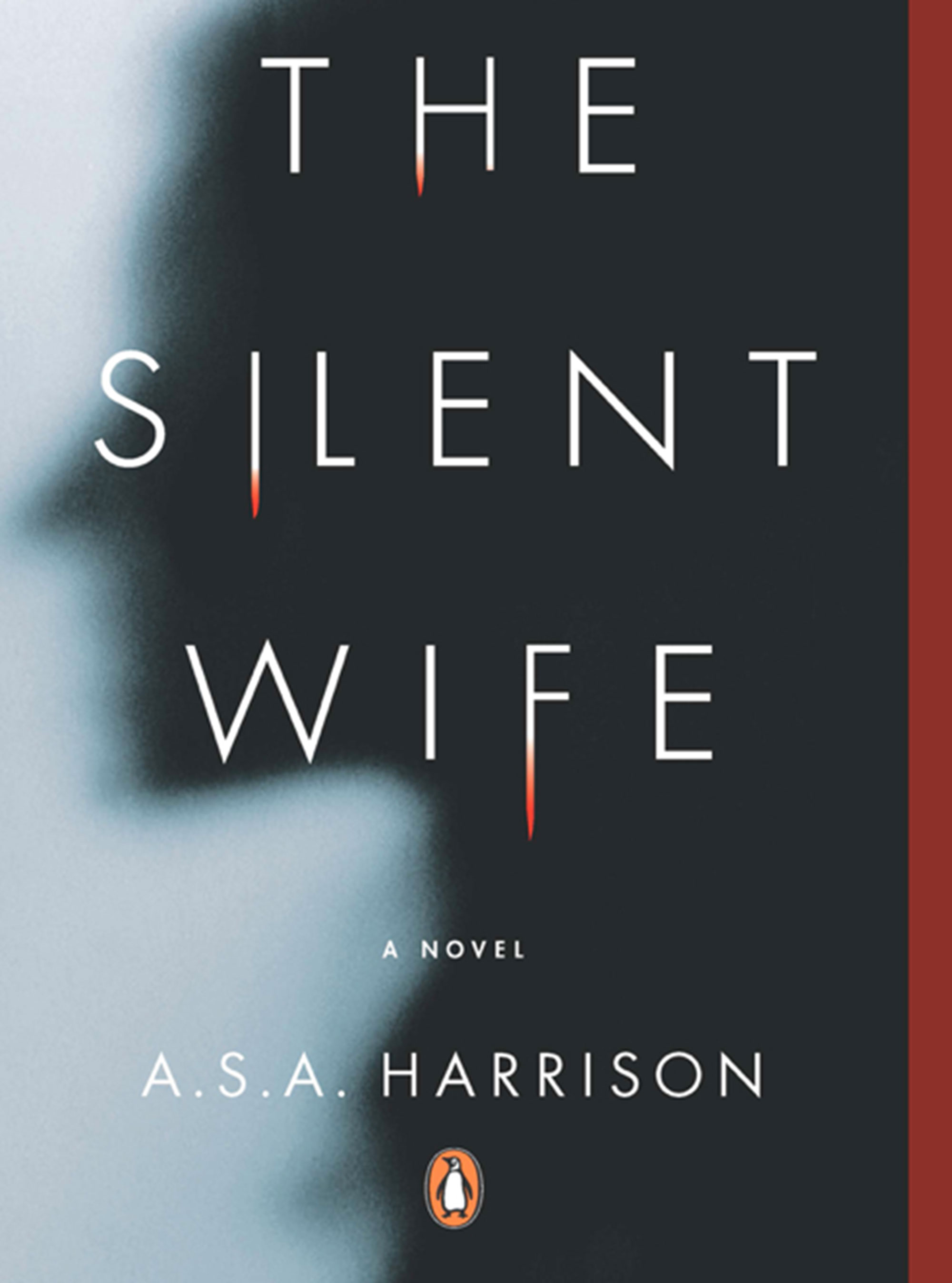
Here is my answer: The Silent Wife shines and indeed goes above what Gone Girl was able to deliver. I have always lamented the endings of Flynn's novels - they always feel short to me, cut off, almost as if the author got tired of writing and said "here you go! The ending! Now I'm done." The Silent Wife has a coming down after what I consider to be the ending. We have closure and a release after the climax hits, as opposed to a hurried and rushed finality. 

This isn't a spoiler because the fact I'm about to present you with is revealed to the reader on page four of the book. Meet Todd Gilbert and Jodi Brett. They are not married in the traditional sense, meaning they never actually walked down the aisle and said their "I Do's," but the two of them have been together in what they consider a common-law marriage for twenty years. Jodi Brett is often called Mrs. Gilbert, and she cooks, cares for, and keeps life easy for her husband. By easy I mean to say that she knows full well that he is a cheater, and she allows this with the idea that all men cheat on their wives somehow. By staying silent she keeps his love. She is a counseling psychologist and Todd is an entrepreneur who flips/builds buildings. 

On page four it is revealed to us that the relationship between these two is disintegrating. "Her notions about who she is and how she ought to conduct herself are far less stable than she supposes, given that a few short months are all it will take to make a killer out of her." Jodi Brett will kill her husband. At this point we do not know how she will accomplish this but we read the book knowing and expecting it to happen. 

The Silent Wife is similar to Gone Girl in that there are "him" and "her" chapters. We get the story from both sides of the conflict. We hear their own personal discontents with their marriage, and in both novels neither couple has children (at first). Both books make us at points hate each character individually, although in this book I always hated Todd Gilbert more than I did his wife. Jodi is a therapist (as I mentioned) who only takes what she can handle. She doesn't do cases with clients who have eating disorders or more serious issues - she keeps the "crazies" at bay, preferring to not worry about a potential suicide or such. The story itself is told in third person - their dialogue is the only genuine insight we get from them, otherwise there's a narrator who tells us about what "she" and "he" are going through. 


A main theme in this book is the roles of men and women, and should women become domesticated and allow their husbands to roam as long as they come back at night? "And yet, none of this matters. It simply doesn't matter that time and time again he gives the game away, because he knows and she knows that he's a cheater, and he knows that she knows, but the point is that the pretense, the all-important pretense must be maintained, the illusion that everything is fine and nothing is the matter." Jodi Brett, and in a way Todd as well, are in constant denial. As long as the facts are maintained and their routines are kept up, the two of them for a long time believe that things can keep going on the way that they are. This is until Todd gets a rush of excitement as he finds out that his twenty-something girlfriend on the side is pregnant and thus demanding him to move out and leave Jodi with nothing - and remember she's not entitled to anything, because in all actuality the two are not married. Dilemmas ensue. 

Before the bottom falls out from underneath her, Jodi believes in her clinical sense that you must accept someone for who they are, their faults, their idiosyncrasies and not try to change them. "Other people are not here to fill our needs or meet our expectations, nor will they always treat us well. Failure to accept this will generate feelings of anger and resentment. Peace of mind comes with taking people as they are and emphasizing the positive." We realize early on that Jodi has suppressed a lot of things from her childhood, and now she suppresses the negatives, the untidy parts, of her relationship in the hopes that if she can ignore the glaring grease spots on the otherwise tidy glistening counter of her relationship she can survive. In my opinion, it is this suppression that leads her to losing her mind over the inevitable grief that follows in the repetitive blows dealt to her by the man she loved for so long, and in the stupidity she feels as she recognizes that she should have sucked up her pride and married him long ago. In trying to protect herself by not getting married, she doomed herself to landing in a sticky situation with no security. 

Todd calls Jodi a "cold dish of porridge in bed," but claims that he can accept her faults as she keeps his life nice and neat and provides him with comforts such as an always homemade dinner and a clean house, and no angry yelling or pointed questions about his weekend "fishing" trips and late night "dinners" with "colleagues." Todd truly believes that a "fling" on the side is nothing worth fretting about. Early in their relationship he made a comment to Jodi that didn't seem to raise her alarms. He stated that "Monogamy wasn't designed for men. Or men weren't designed for monogamy ... all men cheat sooner or later, one way or another. My father [an alcoholic] cheated with the bottle." Another theme in this novel is your childhood informing your adult self. Todd believes cheating is okay, because all men do it. When he was a kid he knew that his father loved his booze more than his family, but everyone dealt with it. 

With the revelation of his girlfriend's pregnancy, Todd starts to realize that his perfect double life is going awry. He compares his two women to one another. If only she was more like her, etc. He is selfish and idiotic, but in a way, so is Jodi. To get him back all this years, Jodi commits little misdemeanors against him. She is silently vindictive and does things to him that hurt him but he never traces it back to her - such as throwing his cell phone into the lake when he's drunk, drugging his milkshakes, or stealing his keys. It soon becomes evident that Jodi is a crazy methodical bitch, and she doesn't even realize how calculating and dangerous she is. She excels at discreet retaliation that punishes Todd just enough to make her feel satiated. The two of them are deranged. They are in denial and try to give themselves personal affirmations of their own sanity. 

Jodi's weapon in the novel is indeed her silence. Her silence is dense and purposeful; it is a barricade against anything that could hurt her. 

This is truly the first suspenseful suspense novel that I have ever read. It raises your blood pressure and then brings it back down as you can finally breathe once you realize that the end has not come too soon. You will find yourself wanting the death of Todd Gilbert to be painful and incredibly slow as realization creeps across his face in his final moments, and that wish may or may not be denied you. You won't be sure until the end. This brought out the ugly in me, but I'd read it again and relish the feeling of losing my own clarity as the novel continues. In the end I felt satisfied and only wish I had more. My only commentary is that it would be nice to someday read a book like this where the woman becomes the cheating bastard and the man suffers from financial and emotional deprivation. I have yet to come upon a novel that serves me up that treat in such a way as this - long-suffering pain and repressed urges that erupt in a blunt and bitter end - where the woman is the one we despise more-so than the man. 

As the book states, "we sometimes have to live with unpleasant realities," and how we deal with those realities can make for some really good reading on a rainy day. Give this book a shot because you will enjoy its upscale commentary on relationships - the unfairness of it all and the sick pleasure one might achieve from revenge and redemption. Once you leave the comfort of your home - the comfort of your loved one - anything is possible ... 

Thursday, October 17, 2013

Picking Your Books

I don't know if anyone else ever has this problem ... but I'm somewhat overly concerned with the order in which I read my books. I like them to have some sort of connection to them that makes sense and makes me feel good as a flit around from one book to the next - from one beautiful cover to another.

Hence here is my fall break dilemma. In what order to I read the books leftover on my shelves? Here is what I'm thinking thus far:

Finish The Silent Wife ... move on to:

Orange is the New Black

Pick up the fifth book in the "Game of Thrones" series, called A Dance of Dragons. Work really hard to finish that in a couple of days and move onto:

The Husband's Secret and then What Alice Forgot ... both by the same author, Liane Moriarty

The Night Circus 

Then start The Hunger Games trilogy. At this point I will probably be back in school, and then after The Hunger Games are through I will be moving on to finishing the last two books in The Southern Vampire Mysteries series and then reading Admission, which has now been turned into a movie starring Tina Fey and Paul Rudd. At this point I will need to buy some more new books - but trust me I've already got a list compiled of my next purchases.

If you have any suggestions of books to add to this ongoing list - send them my way!

Keep reading ... oh! And enjoy your fall break ... or if you're not on break, enjoy your fall with some nice beer or fancy wine - some of the best accompaniments to a reading marathon.

<3 Britt


Done in a Day - "The face you give the world tells the world how to treat you"

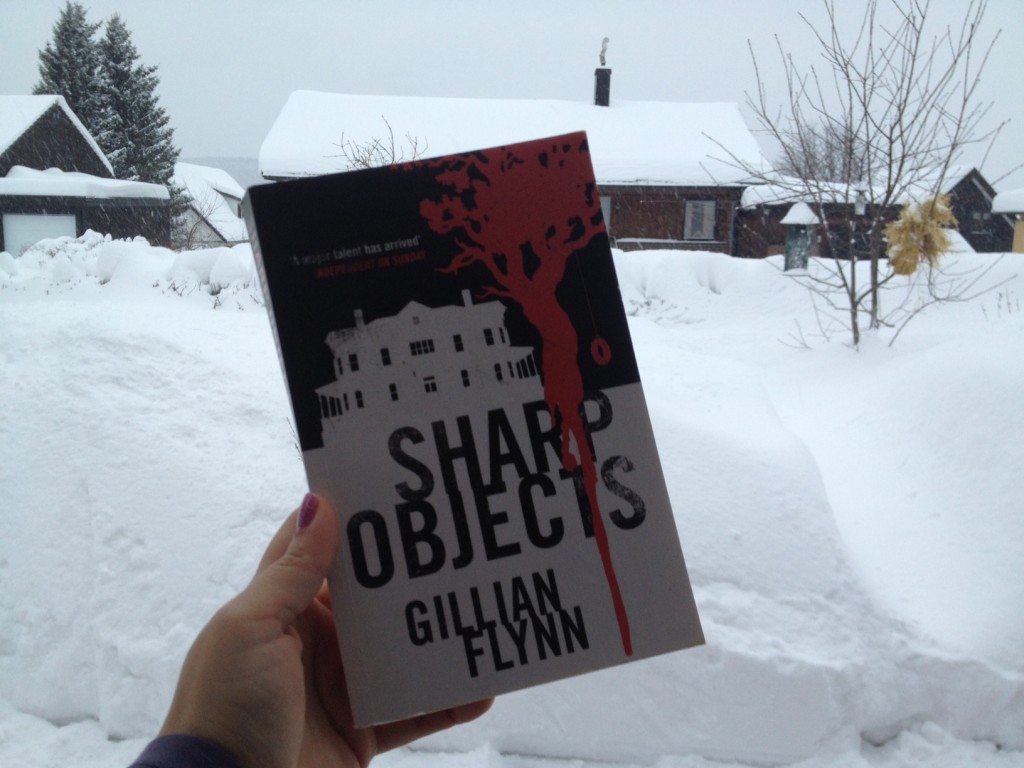
Last night before I slipped off to blissful sleep I finished Gillian Flynn's debut novel, Sharp Objects. First, let me start with the negative criticism. I love her stories, but I do believe that I had this objection of her other two novels as well. They end too quickly, too abruptly. Sharp Objects has such an epic build but it's filled with a somewhat obvious ending that comes too fast. This is a mystery/psychological thriller novel, and I had my opinions early on concerning who I thought the killer was. Turns out both of my assumptions ended up being correct in their own ways. 
It's not a new story in my opinion but it adds a new twist when we meet our main character, Camille. Camille has a history of cutting herself. Words - she cuts words all over her body, and it's this deeper edge to her ... that vivid outside representation of her internal scars that makes her an intriguing character. You are rooting for her to return to her home down, a place that has damaged her psyche and her physique, to write about two serial murders of two young girls. Girls that we find out are damaged and wild just like she was. 

Camille lives in Chicago writing for a second-rate paper, and she considers herself to be a second-rate journalist. This story could be a big break for both her own career and the future of her paper. When her boss advises her to give it a shot and head down to Missouri, a place that is painted as being more Deep South than Midwest,  Camille's old-time anxiety and panic rise up to terrify her, but she manages to wrench her hands free of the chair she is sitting in and head down to Wind Gap, Missouri to write about horrific events happening there and face the demons of her past life as well. And when I say demons ... I mean her family. She refers to herself as white trash from old money ... but we soon find out that appearance is everything in her family household, and she obviously doesn't fit that bill. She also lacks the self-confidence, submissive mindset, "southern" poise, and placid personality that pleases her mother, the matriarch of Wind Gap - Adora. In addition to the powerful and unloving Adora, Camille must face a sister she doesn't know, Amma (who acts like a china doll at home and a 13-year-old-street-whore outside of it), and then there's the outsider cop brought in to solve the murders from Kansas City who she may just have a crush on, the old friends she no longer fits in with, and finally the families and residents of Wind Gap who just really don't want to talk to her at all.


Camille is obviously put off by her southern Missouri upbringing and as previously mentioned is incredibly reluctant to return to her home town, especially to investigate the murders of two little girls. So while we may be rooting for her to survive this trip, we find out quite fast that this is not going to be a welcome homecoming for her, and she will constantly struggle to find her footing. Being back in Wind Gap leads our psychologically damaged heroine to become awash in alcohol, twitch at the sight of sharp objects, and torment her mother. Tormenting her mother is not hard considering that years ago Camille's little sister, Marian, had died from a terrible sickness, and it becomes evident that Marian was the favorite child, and at one point Adora even remarks that it should have been Camille and not her darling little sister. Every time that Adora sees Camille working on the murder cases she freaks out - further widening the gap between her and her daughter. 

As the case goes on with no visible leads in sight, and the cops aren't leaking any information to Camille, she starts to drink even more and judge herself more harshly as an incompetent second-rate journalist. She is hindered by her mother's reproaches and the wariness of her small town neighbors. As time drags on, the tension between Camille and Adora grows stronger. Amma has a tantrum one day, and Camille remarks upon how it's strange for a 13-year old to throw such a fit, at which time Adora tells her daughter, "Yes, well, you weren't exactly placid yourself at that age." Camille stands up as she tries to dissect that comment - did her mother mean her 'cutting, her crying jags over her lost sister, her overactive sex life ...' 

Her stepfather asks her to sit down and then questions Camille about the good feedback she is receiving as a journalist in Chicago, to which she replies "Well, I've been doing some more high-profile stories. I've covered three murders just since the beginning of the year." Camille's mother, ever the reproachful one, replies "And that's a good thing, Camille? ... I will never understand where your penchant for ugliness comes froLm. Seems like you have enough of that in your life without deliberately seeking it out." And then her mother laughs - a shrill sounding laugh. 

"Every tragedy that happens in the world happens to my mother, and this more than anything about her turns my stomach. She worries over people she's never met who have a spell of bad chance. She cries over news from across the globe. It's all too much for her, the cruelty of human beings." 


This book exposes the cruelty of human beings, the emptiness of women, the feeling of being barren even if you do produce children, the judgment one passes down on victims, and the feeling of being targeted for something you didn't commit. Sharp Objects is indeed a great debut novel, and no one can deny that Gillian Flynn's other books are just as twisted and delightful. Okay, I don't know if I'd call this novel delightful, but it's extremely engaging. Again, I only wish that the ending was packed with just as much punch as the rest of the story. It lacked the tension and attention needed for such a moment of discovery. 

Read Sharp Objects, and if you haven't already give her other two novels a shot, Dark Places and Gone Girl. She's a great author, truly, and her books can foster some great discussions. Sharp Objects is a novel that forced me to examine my own demons, my own times where I sought out a love that was damaged and just not there, and it pushed me to at times question my own coping mechanisms for when things get ridiculously hard.


I'm moving on to The Silent Wife, described by author Sophie Hannah as "better than Gillian Flynn's Gone Girl. A must read for anyone who is occasionally ruthless, reckless, or ... loves clever books with depth and heart." That sounds like a great invitation to me. Check by in a day or two for my opinion on A.S.A. Harrison's The Silent Wife. Let's examine if she can pull off mystery better than Mrs. Flynn. 

Tuesday, October 15, 2013

On to something new ...

I just finished reading the fourth book in the "Game of Thrones" series, A Song of Ice and Fire. I loved it. The series keeps getting better, even though it took a while for me to get used to some of the new point of view characters.


Now I'm onto another book by an author who I haven't read in a while. I will be diving into Sharp Objects, the debut novel of Gillian Flynn, bestselling author of Gone Girl and Dark Places - both novels that I've read. I'm exciting to get into this psychological thriller which was described by Stephen King as being an "admirably nasty piece of work, elevated by sharp writing and sharper insights." Here we go folks!

Keep on reading,

Britt

Friday, September 27, 2013

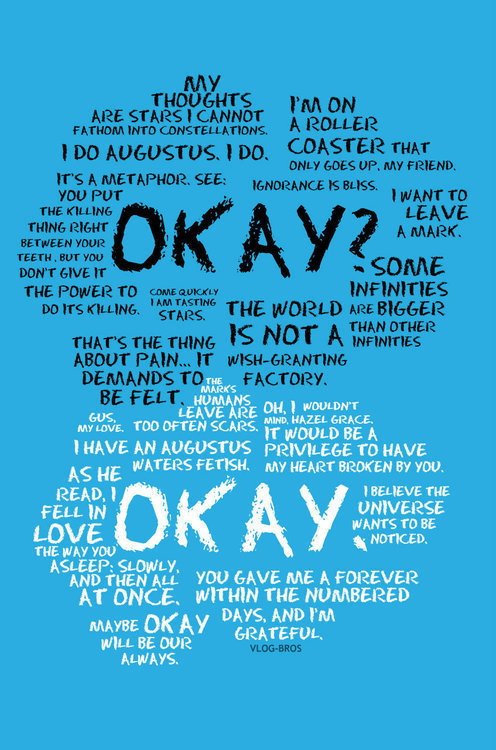
ThE fAuLt In OuR sTaRs

In college I hated/despised/sort of looked forward to the always inevitable assignment in each theater class that would require us to pay money to go to see a show in the city and then write a review on it. I hated and despised it because sometimes it just wasn't a show I wanted to see. Although to counter that hatred ... I have to admit that even the shows I wasn't necessarily looking forward to always brought me some sort of joy in the end. I despised these assignments because it required me to spend money I didn't have to see a show I might not like or didn't desire to see in the first place. Finally, I kind of looked forward to these shows because any time you get to see theater is a blessing and some folks aren't so lucky to be exposed to the arts or have access to great artistry. 

The reason I bring this up is because my college professors (whom I remember fondly ... or not so fondly ...) always told us to take notes during the show so we wouldn't forget any important details (which I never did) and then to write the review the moment we got home so it would be fresh in our minds (which I never did). To review something immediately after seeing it or reading it is to have your feelings and reactions fresh in your mind to be transported through your body, out your fingers, and onto the page for someone to read and judge or converse with you on. Here's what happened with the bestselling young adult novel The Fault in Our Stars by John Green. This 2012 novel has been a hit since it came out and has been recommended to me by many people. I've put off reading it.


Let's face it ... who really wants to read a novel about a kid with cancer unless you want to cry (I mean c'mon, we can all guess how this is probably going to end, right???); I mean who wants to read a book that you just KNOW will probably make tears run down your face in rapid succession??? It's like the people who purposely seek out ridiculous movies that they know will end in someone dying (e.g. The Notebook, Steel Magnolias, A Walk to Remember, The Last Song, Moulin Rouge, Titanic, Forrest Gump, Love Story, etc.). Wait a minute ... let's look at those movies. Isn't it true that sometimes the best love stories are the ones that end in death? Well guess what, we can add The Fault in Our Stars to this list. Oh don't be surprised, you know someone is going to die in it the moment that someone who recommends it to you goes "Oh my God, you're so gonna cry at the end!" ..... FYI let's just remark upon that fact that Nicholas Sparks novels also usually end in someone dying. 

Okay my movie example tangent is done, but let's return to this all-star novel. I'm going to be honest with you, I was excited to read it, but when I started reading it I hated it. It reminded me of some of my favorite books and TV shows from when I was a "kid," for example, the Sloppy Firsts series, Dawson's Creek, The Princess Diaries, etc. It's about a group of kids who think they're too smart to relate to the people around them, and who also think that they've experienced too much in their probably too short lives to handle. The only difference between this kids and the Dawson's Creek characters, or Jessica Darling and Marcus Flutie from Sloppy Firsts, is that these kids in this book have cancer. These children and even their parents come off as somewhat pretentious and witty, but it's all understandable, right? I can't even begin to imagine what it would be like to be an adult with cancer, but to be a kid? Dealing with puberty, school, parents, zits, boyfriends/girlfriends, cars, etc. .... oh and cancer. No. I get it. It didn't change the fact that for me I wanted to tell our main character, Hazel Grace, to cool the pessimism. Is that fair of me? No, but here's my reasoning. 


I do not have cancer, nor have I ever had cancer. However, I am one of the most bitter, pessimistic jerk-offs in the world, and yes there are moments where I find my quick and witty retorts quite clever. I have had things in my life go terribly wrong and yes, I've experienced some painful stuff. When I let my negativity infect the environment around me, and I blamed it on my past, one thing I hated is when people said "well at least you're not dealing with ________," or "someone might have it worse _________." I wanted to tell them the quote that "saying someone can't be sad because someone else may have it worse is just like saying someone can't be happy because someone else may have it better." We can't judge others' pains by our own. Here's my point with this. I am not comparing myself to the main character Hazel Grace or her friends, but I am saying that I wanted to reach out to this young girl and say "yes your life is hard, I get it ... I'm not going to tell you it could be worse, but I will say don't let it turn you into an asshole." So back to the point ... I started off not liking the book. Being smart with your retorts doesn't lighten up your crappy attitude. AND if you are likely to have a short-lived life ... why live it so angrily? But again ... what do I know? 


This book is about a girl and a boy. It's a love story. Based on my given examples above we can assume someones gonna die, right? Right. Here's the catch. Hazel Grace has terminal thyroid cancer and her lungs are shot, so she has to walk around attached to an oxygen tank. That sucks. Her mother forces her to get out of the house and go to a support group (that I would probably hate just as much as Hazel does ... stupid cheesy bastards trying to make it all okay), but anyway, at this support group one day Hazel meets a boy named Augustus Waters. Here I had my dislike of the book grow. Could we pick more pretentious names? AUGUST WATERS? AUGUSTUS. Have you ever met anyone named Augustus in your whole entire life? Well I haven't. Anyways, here's the thing. The character's got a special name because he turns out to be an incredibly special guy. His cancer left him an amputee without a leg. He and Hazel form a bond that can only be described as one that is just as unique as they are, and stronger than most real-life relationships I've seen. 

Hazel turns out to remind me again a lot of myself. She'd rather stay in the house with her horrible TV-addicted affliction and watch consecutive reruns of Top Chef or America's Next Top Model. Me too lady! And as previously mentioned she has an air of "I take quite a lot of pride in not knowing what's cool." So as the book progresses her bitterness stops rubbing me the wrong way, and I start to really like her teenage, cancer-ridden, angsty little self. As much as I hate to admit this, I also feel tremendous amounts of pity for her; I thank my lucky stars I don't have to lug around an oxygen tank with me and I can indeed breathe in with healthy full lungs. Does it make me a bad person? Perhaps. However, as she gets to know Augustus Waters I feel myself envious of this slow-burning young life developing between two young kids - star-crossed lovers. Hence the title enters in ... "the fault in our stars." Again ... we know that someone is going to die, and Hazel is positive that she's a grenade that will ruin the lives of anyone who comes to close to her, including Augustus and her parents. I understand her isolation, I feel for her sadness, and god damn it I wish she just didn't have to deal with all the crap. She is all too aware of the side-effects of death and dying; something that young people shouldn't even fathom. Her stars doomed her from the start, but it made her a heck of a person with a broad understanding of living life and how to live it or hide from it. She grows in this book tremendously and you can't help but come to love her journey from angry little hermit crab to the young woman filled with love and passion that she becomes. 

I hope this makes sense. When I get passionate about literature or film I tend to rant. I am ranting, but I am passionate about this book I hated initially and then came to adore. Hazel is not just a angst-ridden teenage cancer inflicted girl. I learned that she was kind and addicted to the same TV shows I like. She contemplates why eggs are considered strictly breakfast foods. She comforts her friends who slowly lose themselves to the diseases that take over their bodies. She falls in love. She remarks upon "cancer perks" and goes to Amsterdam with a boy who just like her is incredibly poetic and who thinks too much. Her story is beautifully tragic. They constantly discuss a world in which they'll never live in and lament over things they might never experience. 

In Amsterdam the two (plus Hazel's mother) prepare to meet the author of a book they both love. This was Augustus' wish (a cancer perk). As they drive into town their cab driver informs them that "Some tourists think Amsterdam is a city of sin, but in truth it is a city of freedom. And in freedom, most people find sin." 

As Hazel gets ready to go out to eat with Augustus, her mom pushes her into a sundress and remarks upon how their dinner together will be romantic. Hazel remarks that "One might marvel at the insanity of the situation: A mother send her sixteen-year-old daughter alone with a seventeen-year-old boy out into a foreign city famous for its permissiveness. But this, too, was a side effect of dying: I could not run or dance or eat foods rich in nitrogen, but in the city of freedom, I was among the most liberated of its residents." 

At their dinner the two drink champagne - it is compared to bottled stars. 

I hated this book because I hated Hazel. I hated the negativity I saw inside her and I was so tempted to say "Could it be worse?!" I swallowed it down. I didn't want her to have the negativity I carry with myself. I wanted her to not get bogged down in the shitty-ness of her situation, but I learned throughout her journey that she has every right to feel the pain of her wounds. Hazel fell in love; slowly she learned that isn't a grenade and that she is not going to destroy people who get close to her. She will make their lives richer even if they can only have her for a short period of time. On her last day in Amsterdam she leaves us with wisdom: "You have a choice in this world, I believe, about how to tell sad stories, and we made the funny choice ..." 

Hazel leaves her negativity and recluse living for a life of love, heartbreak, hard lessons, and bottled stars. Eventually her stars dictate that tragedy take over, but she still endures and teaches lessons to those around her including me. As Stephen King said, "You want to remember that while you're judging the book, the book is judging you." Yes, I ended up crying my eyes out alone in my bed by the end of the book, and I realized that I was quick to judge someone who had every right to express her pain in a negative way. She didn't need me to save her, instead she allowed me to go on a journey with her filled with the inevitable end always in mind, but with laughter and love throughout. Give this book a read. You'll quickly want to drink bottled stars with Hazel Grace and the ridiculously named Augustus Waters. They remind us that everything is going to be "okay."

Monday, September 23, 2013

Reading is the Best Medicine

So yesterday I started reading the teen novel The Selection, and then I finished The Selection.Then last night I opened up its sequel, The Elite. Guess what? I crawled into bed at around 8pm with Scott - he caught what I've got - the sore throat/fever/I feel like death sickness. I had The Elite finished by midnight.


I love reading teen novels! They're quick reads for me, which is nice considering that once the school year starts I hardly have any time for reading anything fun, and they remind me a bit of what it's like to be a teenage girl ... wanting to find your true love, hungering for adventure, and being able to believe enough in the impossible to allow yourself to be transported into a somewhat cheesier world than your own. But certainly a world that is sometimes more interesting. 

I enjoyed The Elite a lot more than The Selection. In this second novel we get into more of the history of this made up country and the politics run a bit deeper. Our main girl, America, starts to care more about the job of becoming princess than her love for the prince, Maxon. She genuinely worries that she won't be able to handle the job properly and constantly seeks approval from her loved ones. America becomes the obvious change that Illea needs ... the becomes to hope of the people, the thorn in the king's side, and the beaming light of hope for the people in the lower castes. All at the same time she's fighting to prove to the prince that she does love him and fights to keep him as his true personality and deep secrets are slowly revealed. The prince becomes someone we may not like as much as we did before as we see his mask slowly come off, but in the end America realizes that for all his flaws she still has the desire to love him and is ready to fight to become "The One," the future Queen, and the future of Illea. Yes it's cheesy, but it's incredibly enjoyable and I devoured it. 

Apparently I was not the only reader to comment on how this book is a hybrid between The Hunger Games and The Bachelor. Other critics have also made the observation, and it becomes even more clear in this book. It's definitely got some similar themes that make it a super entertaining read. There's the political unrest of the people, the caste system, the theme of hunger and what it drives people to do, justice, the main character being a female who likes to fight for justice and thus piss off the elite, and then there's a competition where multiple women fight for one man, and yes that's completely anti-feminist and archaic, but those themes and issues are also explored. In fact, in The Elite, there are rebel groups attacking both the palace and the girls in the selection's families trying to end the selection because these rebels notice that it's wrong to basically sell your daughter to the monarchy to become Illea's property all for the "love" of one man. It's definintely worth a shot reading. Again ... unlike The Hunger Games, this does not strike me as something that would interest any boys, but it could be a good read for young girls, and could even start up some thought-provoking questions for those young girls. Would you join a competition of 35 girls to fight for a prince's love? Would you openly oppose the monarchy in front of your entire country, risking your life and your possibilities for love, if it meant that you would be saving your best friend? Would you publicly announce that you want to eliminate the caste system in a room full of the elite? Would you fight for justice? When stuck in love ... where do you go? Why do you think the entire history of a nation is hidden from its people?


The book is sweet. As one of America's maids points out to her little sister, "love is beautiful fear." Love is a complicated emotion that serves as the center for many of the stories we love as readers. "You know that you've found something amazing, and you want to hold on to it forever; and every second after you have it, you fear the moment you might lose it." I feel this everyday about the love I have for Scott. To lose that love would be worse than losing a limb, and probably more painful. It's even more painful for America who sees her love with other girls everyday, and then she sees her past love, her first love, who she isn't allowed to be with. She feels like she's losing it all. Pile on top of that the politics involved in her life, and you've got a pretty chaotic situation. America and her first love, Aspen (who is now a solider in the palace), are rarities for their country. They were a five and six pulled out of their monotonous lives and placed in the palace ... and now the two of them have opportunities to change their world that they never dreamed of. 

I'm incredibly excited for the third book in the trilogy to come out in 2014. We'll see if America does indeed end up with Prince Maxon - the boy with whom she must build up trust again with, or if she ends up marrying Aspen, her first love who was a caste below her, now risen up to caste two as a soldier. Will she become princess? Will she be happy? Will she change the world? 

Sunday, September 22, 2013

September is the Perfect Time for Reading

So it's been a while. I finished reading the third installment in the "Game of Thrones" series, A Storm of Swords, yesterday. I have to say that this might have been my favorite so far out of the three books I've read of the A Song of Ice and Fire series. It was heartbreaking to lose some characters that I loved and cared about, and enjoyed reading about. Their story lines were exciting and controversial and now they're gone. Although I'm sure they'll only be replaced by new invigorating characters that arouse our interest and keep us reading about this fight for the iron throne.


On Friday I came down with a sickness that has left me feverish, tired, and with a terribly painful sore throat and hacking cough. In one day I finished yet another book, The Selection by Kiera Cass. This reminds me of a teenage romance version of The Hunger Games. Granted I have yet to read The Hunger Games series, but they are sitting on my desk awaiting my attention. I have, however, seen the movies. The Selection is a Harper Teen Romance and New York Times Bestseller. It's way above something my fifth graders could read, and boys will have no interest in it whatsoever, but I enjoyed the quick brain break from my usual reads. It was enjoyable and lovely. At 327 pages it was a quick read for me but it was really enjoyable. Not overly complicated and something I remember reading when I was teenager. Similar to The Hunger Games it focuses on a society in a restless state that is highly based on social status. In this world everyone belongs to a caste, and any caste that is 5 or below struggles to survive. Our main character, America, is named after a country that fought to stay united. You see, in this teen novel the United States of America have been dismantled due to severe bankruptcy and constant attacks from foreign countries looking to be paid back. 

After the U.S. was able to fight back and win some independence no one wanted to go back to a name that represented a country that fell, and so the U.S. gets renamed and becomes a monarchy. Here is where our heroine, America, comes in. She is in caste 5 which is reserved for artists (musicians, dancers, painters, etc.) and is generally poor as it is only three caste levels away from the bottom. America, being of age, enters into a competition known as "the selection," a competition featuring 35 young ladies fighting to win the heart of the prince, Maxon.

America originally does not want to enter this competition as she is in love with a young man named Aspen, but herein lies her problem: Aspen is from caste 6, a caste below her. Her parents want more for her, and unfortunately so does Aspen despite the love the two share for one another. Either way, heartbroken and terrified, America goes on to move into the palace and enjoy some steady meals and some pampering, and it helps that her parents continue to receive compensation for as long as she stays in the competition. America is originally hesitant and disliking of the prince, but as she gets to know him her heart opens to possibilities that she had never before considered. Who will she end up choosing ... a young prince who adores her, or a man that she fell in love with years before in a backyard tree house? Does America have what it takes to leave her caste and join the elite? Only time will tell as this is only the first book in a trilogy. I have the second book which I'll be reading now, and the third is due out sometime in 2014.


This teen romance novel is a combination of "The Bachelor" combined with some slight political unrest, similar to Hunger Games, but with less fighting to the death. The girls fighting for Maxon's hearts are regularly filmed and featured on TV, and yes public opinion does matter, as well the different girls' political and social affiliations. Can social status be pushed aside for love? This is a fun novel geared toward teenage girls who dream of Cinderella-esque scenarios. For us adults, it's a quick and endearing read.