Monday, November 11, 2013

The Strangely Beautiful Tale of Miss Percy Parker

A while ago one of my best friends, Daisy, suggested that a read a book entitled The Strangely Beautiful Tale of Miss Percy Parker. Her recommendation did not disappoint. She was also the same person who in middle school turned me on to the "Jessica Darling series" after I had read Sloppy Firsts ... which still remains one of my favorite books today. 

Percy Parker is unlike The Night Circus in that both set out to be beautiful, romantic, tense, adventurous, and fantastic ... but this Strangely Beautiful Tale actually accomplishes those goals. The last two novels I've read - this and The Night Circus - both start out in the 1800's, and so the tale of a young girl named Percy takes place in Victorian England and that is precisely what it feels like. Unlike the "Victorian" story about a magical circus, this book is immediately captivating and enchanting. 


Starting out with the back story of The Guard, we hear how six children were somewhat possessed by people past and brought together to keep the balance going between the world of the living and that of the dead. Their charge is to keep the ghosts and the humans blissfully unaware of each other and content in their respective worlds. Not only can they see ghosts, but each of the original six has a special power that renders them imperative to The Guard's success. Their only problem is a prophecy that someday a seventh will join them, but they must be careful as to who that is and not let the wrong one in ... oh, and they cannot actually talk to the ghosts they see, which when picking a seventh would be extremely helpful. 

On the other hand we flash forward about 18 years and we meet the ghostly-looking girl whose skin is like porcelain and white hair and crystalline eyes are shocking. She can speak to ghosts. She has visions. And you can guess pretty quickly she's going to be their seventh, even if they don't know it yet. She comes to Athens Academy - a Quaker school where she can study among both men and women (a novelty in the Victorian age), but she constantly gripes about how she looks and people tend to stare at her somewhat albino-like visage. 


Here's where things get tricky for Miss Percy Parker. Not only can she talk to the dead but she has an affinity for languages and can usually start speaking them fluently upon hearing them only a few times. She, unfortunately, stinks at mathematics and alchemy. This leads to her requiring private tutoring lessons from the foreboding but beguiling Professor Alexi Rychman. Alexi is the leader of The Guard and is on constant lookout for their potential seventh, their Prophecy. He believes to his core that the seventh must be someone he will fall in love with, and his lessons with the strange and timid Miss Parker start to lead him down a path he is unsure of and somewhat unwilling to explore. 

If you give this book a shot you will be drawn into the peculiar but indeed spectacular and inexplicable tale of a strange and beautiful woman. The book is filled with heroic and immense details that immediately pull you into the London world where the dark is constantly battling the light. At times it is cheesy ... as it also provides a theory that is way out of this world for who (or what) Jack the Ripper was. The dialogue between Percy Parker and those around her is sometimes extremely awkward and pulls you out of the moment - especially because she is constantly bemoaning how she looks and is unconvinced that she is anything other than repulsive. Her self-consciousness and insecurity is sometimes at the least, annoying, and the dear Professor Alexi often has to shut her whining down. Her constant appraisal of her looks irritated me, but not enough to stop loving the book itself. 

On another note, comparing this to The Night Circus, the enchanter who "raised" Celia and forced her into the competition of her life was called Prospero for his stage name, and in The Strangely Beautiful Tale, Alexi's horse is called Prospero and is not the best enchanter of his time, but he is apparently the best horse in London. Apparently those British folk really feel a connection to Shakespeare. 

If I'm getting back on track, another interesting twist in this tale is that Percy is actually short for Persephone. The Greek goddess who is repulsed by pomegranate seeds - as it was these that connected her to the God of the Underworld - Hades - who kidnaps her and forces her to be his bride. This becomes a major plot point in the novel. "Persephone, Greek goddess, bound to the underworld after digesting pomegranate seeds offered her by Hades ... Why, Miss Persephone Parker, there must be more to your story than you know yourself." Just like the goddess herself, Percy has a strong aversion to pomegranate seeds. Personally, I love them ... but I suppose there's never been a theory that I'm a reincarnated goddess either ........ 

The last, but maybe most important, point that I need to make about this sometimes beautiful yet harrowing book is that it is currently out of print. That's right ... in order to get it though you can easily find it on Amazon or the Barnes and Noble marketplace. I bought this book for about $6, and just purchased the sequel (yes there's a sequel!) for around the same. Apparently this book was published by a company called Dorchester Publishing, and apparently Dorchester does not pay its authors so it has unfortunately closed. The author, Leanna Renee Hieber, is trying to get her rights back and resell I believe. Until then, happy hunting! It's worth the search. 

Saturday, November 9, 2013

Change of Plans

So I had a plan of which books to read when ... but due to my wonderful boyfriend giving me a set of four very different but enchanting-looking books for our 4 year anniversary ... those plans have changed. Also my own book-buying habits have caused me to push back my reading of the fifth "Game of Thrones" book even further ... perhaps not until Thanksgiving. I also have a book planned to read over Christmas break. An 800+ page London ... written by the same author of Paris, an incredible book that I would beg you to read if I felt like begging.

So we'll see what I choose to dive into next ... but until then my books are piling ever higher toward my ceiling.

Keep reading!

Britt


"Wine is bottled poetry" and You'll need wine to come alive at the Circus of Dreams

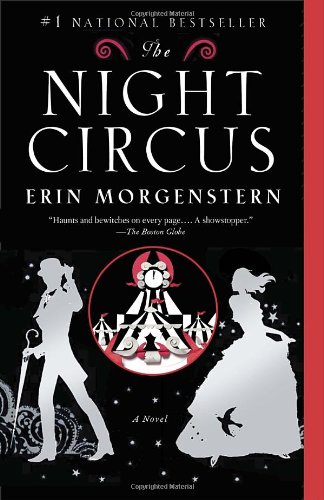
The story starts where it ends ... with a glass of wine, a marvelous storyteller seeking a new beginning, and "the circus arrives without warning," and the circus is only open at night. I have just finished The Night Circus by Erin Morgenstern, a book of approximately 500 pages that admittedly took me longer to finish than I would have liked. 

The book is whimsical and dreary at the same time. For a long chunk of it was actually not a fan at all, but at the end everything comes full circle - like the high black-and-white striped tents of the circus the book describes. At the end the random characters come together to make sense and a competition (which really never seemed like a competition to me at all) makes a little bit more sense, and an undeveloped romance explodes into eternity. 


I quite enjoy the bluntness of unexpected swear words - and so I was amused when an enchanter called Prospero swears at the sight of his unknown daughter left to him suddenly. As his daughter comes into his possession he inserts her into a binding and morose magical game that will either result in her death or her empty victory. Her training for this "game," done in her formative years, reminded me of what one could describe as child abuse. Her binding ceremony involves a ring being burned into her finger where a scar will always remain. It binds her to her opponent, a man who she ultimately comes to fall in love with ... once she figures out who he is. The boy she is bound to asks what he is bound to and the reply he receives is simply "An obligation you already had, and a person you will not meet for some time." These game not only has consequences for its two players but also for all those involved with the game's venue - a circus. Those who experience the game from the outside are ultimately drawn into a battle that no one understands and whose rules are not clear. 

This book is filled with fanciful opportunities that become available to those who are willing to seek them and those who dare to follow. Unfortunately at times the book's dark elegance and warm embrace is baffled by the reader wondering how does it all come together? The individual stories are all fragmented and out of order. Each chapter heading provides a date and place, but often it becomes tiresome to figure out where in the story you're at. The book is also filled with want-to-be beautiful imagery ... filled with empty details that don't quite make the fanciful circus come to fruition. Every once in a while the book does seem to live up to the poetry it promises or hints that it has. When the book accomplishes the wonderment that it constantly tries to attain ... I can feel a very real smile creeping its way across my face. 


If you can trust that in the end the journey each character takes will make sense and you are willing to put up with the book stating "this is love!" without actually feeling it yourself, this is a book for you. If you do give The Night Circus a chance ... it's pretty and smooth cover and flowing star-filled pages will taunt you with promises of grandeur and more often than not it will fail to deliver the written senses to your real ones. If, however, you are like me and at the end you feel that it redeemed itself somewhat from its overly complicated and yet simple at the same time plot ... then I suggest you also try picking up Miss Peregrine's Home for Peculiar Children, which is a much better written magical and fanciful book that actually made me feel transported to a world of magic, monsters, love, and adventure.

Thursday, October 24, 2013

Brittany Can Be Fickle

Oh, yes. I am not going to follow the order I had preordained for myself just a few days ago. I am going to dive into The Night Circus, but put aside the wonderful Liane Moriarty's other novel, What Alice Forgot, at least for now anyway. After Night Circus, I'll have to make my next choices wisely because I just received four new books over the break that I have to pick through and devour as well. I'd also like to get The Hunger Games sooner rather than later, so the fifth "Game of Thrones" book might just have to wait longer than I had anticipated. But we'll see. 

I don't want my break to end ... I really truly do not. I read more than I have in months, I was able to relax a bit, and I was so happy back in Minnesota with my family and my nephew in particular. Having not seen my nephew in 10 months, I was simply dying to see him, and he has grown so much that it's hard to believe he's the same baby I first saw in July of 2012 over a too-short respite from Teach For America's Summer Institute in Tulsa, Oklahoma. 

Teaching has taught me how important it is that we teach our children to love books. To love reading is to open up doors for our children that will provide them with a better ability to succeed and excel in school, have a wide imagination, and to know that as with books ... anything is possible. Unfortunately, I don't feel right now that teaching is the career I was meant to stick with. I want to incite a love of literature in children, but perhaps I need to do that in my own way. Teaching is too troubled a profession for me to be able to stick with it for the rest of my life, but I feel the need to congratulate and admire those who do stick with the teaching profession. Our children need you. My family needs me more back in Minnesota, and my own growing family (Scott and Ike) need me to be a sane and loving woman, instead of the frustrated mess I become when I look at the state of our education system. I will never stop fighting for more educational equality for our kids, but there are other capacities in which I can do that and play a more fitting role for myself. Then again, who knows? By the end of May, perhaps these past few months won't seem so daunting and I'll have a renewed energy to stay in the classroom, but ultimately I have to be the best me to be the best teacher for them. If I can't be that, I'll choose another career. I won't be less than the best for my kids. Some of my interests have expanded to looking into counseling careers - still working in a school setting, but in a different capacity - turning to social work like Scott, or perhaps getting back into children's theater, but this time as a director instead of an actor. We'll see what the future holds ... and like my last book taught me, we can't always know the secrets our lives hold (even though it'd be really helpful in my case). 

Keep reading, keep breathing, keep calm and carry on. Love you all. And I'll keep you updated on my ever-expanding book pile. 


The Husband's Secret

When I first picked up this novel it immediately struck me as another one of those "old lady fiction" books that I have come to despise. As it continued I became distracted by watching episodes of Revenge on Netflix and Law and Order: SVU on TV. When I finally urged myself to re-engage with the book I finally started to think "wow this is good." Now I must say that this book is not just "good," but this book is excellent. 

"There are so many secrets about our lives we'll never know." But sometimes some secrets are revealed that change our paths forever. The book starts with story lines attached to three different main women. We have Cecilia Fitzgerald whose husband has a secret that is hidden in a sealed letter from long ago. The Berlin Wall (a topic that her middle daughter is obsessed with) causes her to hunt around in the attic for a piece of it that she gathered long ago to give to her child as a keepsake. She bumps some old shoe boxes and discovers this letter - to her, to be opened after her husband's death. The only problem here is that her husband isn't yet dead. His secret causes connections to other families dealing with their own secrets. There's Tess, whose brain can't catch up to her new reality - that her best friend and cousin, Felicity, wants to have an affair with Tess's husband, Will. And Will is reluctantly bringing this secret love affair to Tess's un-wanting attention. Finally there is Rachel, whose daughter was murdered years ago. 

The Berlin Wall caused all of the events in the book to unravel. It all seems to go awry with the finding and subsequent opening of that letter. Esther, Cecilia's formerly Titanic-obsessed, but now Berlin-obsessed daughter, constantly points out to her mother the craziness of the whole situation. "Imagine, Mum, if we kids were visiting Grandma in West Berlin for the weekend when the wall went up, and you and Dad were stuck in East Berlin. You'd have to say to us, 'Stay at Grandma's place, kids! Don't come back! For your freedom!" She admonishes to her mother that "it's history," and her mother is left imaging herself in Berlin, separated from her children by a wall. Cecilia is the Queen of her daughter's catholic school, however, and a social-scene master. Her own personal wall has not yet come down, but with the reading of her husband's secret she will find that her wall slowly starts to crumble, and with her own freedom there will be pain and suffering and unimaginable hatred. 


Tess, with the news of her family's infidelity, moves from Melbourne, Australia to Sydney and takes her son along with her. The wall that separates her and her son from her husband is a geographic one, in which only time will close the gap. 

And Rachel, a woman whose lost daughter has forever caused her to pin her eyes upon one suspected man as the murderer has no idea that the truth behind her daughter's death is one that she never would have considered, again until it's too late. As the secrets come spilling out, the book becomes wildly entertaining and morosely realistic. That being said, out of all the books I've read lately this would probably be the happiest. I would not say that The Husband's Secret is a lighthearted read, but is infinitely lighter than some of the other heavy mysteries I've been unpacking. 

At first when the letter that starts the plot rolling was opened I was upset. Beforehand I had had an "aha!" moment where I thought I knew exactly what information that letter would contain. Considering everyone's lives in this book are connected, I figured it out quickly and was not wrong. I was disappointed that I what I thought was the big reveal, the climax of the story, was actually a letdown. It was all revealed too easily, and the truth wasn't grisly enough for my darker hungers. I still appreciated, however, that it happened in the middle of the book so we had somewhere to go. 

As we hear snippets of the Berlin Wall we are also privy to hear some hints and facets of the past that help us figure out the present. All at once this book can be just sad. Horrible, heavy, distraught, sad. Then other times the book makes me feel so happy, and guilty at being happy, that I find myself physically feeling the sensation of what it is to smile. 

In the midst of her life unraveling, the once perfect and poised Cecilia Fitzgerald sits down with her daughter to watch footage of the Berlin Wall coming down, and she cries. When asked why she's crying, she replies "Because they're so happy." And here we see more of the vulnerability of this once proud and perfect woman. "Because they endured this unacceptable thing. Because that woman probably thought, like so many people had, that the Wall would eventually come down, but not in their lifetimes, and that she would never see this day, and yet she had, and now she was dancing." Sometimes it's a good thing that walls come down, and other times it's terrifying and shatters the surreal sense of protection we all once thought we had. 

What this book teaches us is that we all must pay the price for our sins, but sometimes that payment is exacted later on in life when we're not expecting it. It ruins us. In moments like these we use our "crisp, crunchy words" all lovely and fresh: shit, fuck, damn. "This was how it could be done. This was how you lived with a terrible secret. You just did it. You pretended everything was fine. You ignored the deep, cramplike pain in your stomach. You somehow anesthetized yourself so that nothing felt that bad, but nothing felt that good either." 

This book isn't just about our secrets and our walls, our due payments and our sick sense of justice. This is about those abstract ideas of life, love, and relationships. Those "fun flings where nobody got hurt;" those social anxieties that alienate us from people who only want to love us; that healing of relationships that were worn thin from years of neglect, or that were just always tattered and torn to begin with, and that warm feeling that rushes through your veins when all is well. The love of a grandmother toward her grandchild, and the relationship between women - a mother and a daughter, or a girl and her cousin. Tess at one point wonders if her husband fell in love with another women because of her basic personality. Her social anxiety - "Wasn't there something close off, even small-minded and mean, about the way she cut herself off from people, ducking down behind the convenient wall of her shyness, her social anxiety?" I'm like Tess in that I have a horrible social anxiety, and sickeningly I feel relief when friends finally stop calling ... although the good friends never do stop. But Tess's wall of anxiety, and Rachel's wall of emptiness, and Cecilia's wall of perfection ... in the end they all must come tumbling down and the women must embrace the 'freedom' that brings whether they want to or not. 

"Did you know that some people wish the Berlin Wall had never come down? ... That's weird, isn't it? Why would you want to be stuck behind a wall?" 

"Marriage was a form of insanity; love hovering permanently on the edge of aggravation." The words in Moriarty's novel are so rich that I can taste them on my tongue as I read. Her characters are so identifiable ... by this I mean that I can commiserate with them so easily. I can feel for them, with them, and hide behind my own wall as I watch what happens when theirs crumble. When Rachel's wall comes down she must suffer the consequences, as they all must do. 

Again this novel is not just good; it is excellent. My reactions were constantly visceral - my coarse emotions come clawing to the surface with Moriarty's well-connected characters and the damaging effects of karma. I felt so connected to Tess and the fears she faced and the constant crippling shyness she felt in the simplest of situations. I admired and admonished Cecilia and her plight, and felt horribly for Rachel, but God did I just want the woman to move on. But put quite eloquently, "You could try as hard as you could to imagine someone else's tragedy - drowning in icy waters, living in a city split by a wall - but nothing truly hurts until happens to you."

I loved this novel, and I must thank the author, Liane Moriarty, for finally giving me the book I wanted. She gave me everything I wanted in a book. A hint of a climax, then a rise to an even greater climax, and then just enough of the falling action to make the ending completely worth it all. And she revealed the secrets I didn't know I was dying to know. In the epilogue she tells us that "None of us ever know all the possible courses our lives could have and maybe should have taken. It's probably just as well. Some secrets are meant to stay secret forever. Just ask Pandora." Remember, no one ever told Pandora not to open the "box." Some books have failed me in giving me the secrets I so often crave like a maniacal addict, but this book did. Thank you, thank you, and thank you for a truly delectable read. 


P.S. If you read my blog for whatever reason, but tend to ignore my recommendations for reading for whatever reason ... please listen to me on this one and pick up The Husband's Secret. I only wish I would have read it in one sitting. Likewise if you know of any books similar to this one - send them my way. I always love to add to my reading piles. 

Sunday, October 20, 2013

Orange is the New Black

Orange is my favorite color, so I suppose I wouldn't mind if orange became the new black - a moment discussed in Piper Kerman's memoir, Orange is the New Black. Perhaps though I wouldn't enjoy that fashion shift it was a joke written to me by my best friend whilst I was in prison. Piper Kerman found it endearing that her friend send her a newspaper clipping of a fashion trend saying "New York is going orange!" but I think that I would feel super conscious of my new prisoner's uniform.  
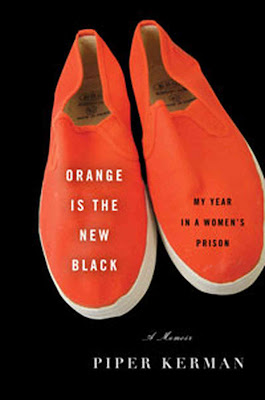
I found myself going into the memoir expecting it to be a close resemblance of the Netflix hit TV show. Turns out I couldn't have been more wrong. Although all of the same elements are there, many of the things that we see happen to Piper in the TV show are exaggerations of the truth, or they're things that happened to other people and the writers of the show took all those things and made them happen to Piper. In her memoir she states often that she learned to survive prison because of the women in there whom she spent time with, but she also laments "prison is terrible!" and I think that in the show they took her reality out of it and made it a farce. I say this disappointingly because I love the TV show, but I think I must now separate the TV show from the book before I get irritated with how helpless and unfortunate the TV show Piper is. In the show, Piper struggles with her family and fiance on the outside, whereas in the book her friends and family are nothing if not absolutely supportive of her. Sure, they might not understand some things she has to deal with, but they don't make it all about them like they do in the show. In my opinion, Netflix's version of this woman's real life experiences is more entertaining than the book, but the book's got way more heart. 

Obviously this memoir is more genuine and certainly more authentic than what I saw on Netflix - but let's be reminded I never would have picked up this book if it were not for the show. I was indeed touched by Piper Kerman's accounts of her time in prison and the relationships she formed there with women - but unlike the show she never indulged in any lesbian affairs and every relationship was purely platonic, although filled with love and care. Also her ex-girlfriend is NOT in the prison with her, but she does happen to meet Nora later at another prison when they're both sent to testify against another drug smuggler who Piper does not even know. It's pretty tense considering Nora is the one who ratted Piper out to the feds for a crime she just barely participated in ten years ago. Nora is "Alex" is in the TV show. Many names and characters were also changed or events were switched around compared to the memoir. 


If I take the Netflix hit off my radar, here's what I think purely about the book. Piper's prison experience did not hold all of the violence, sex, intrigue, time spent in solitary, etc. that I thought it would or that I was expecting. It was truly an account of how a group of women tried to survive the day-to-day nonsense of an institution that didn't care about them and that they didn't want to be in. It talked about the small and large injustices that these women faced and how they were able to cope with it all. In Piper Kerman's case it seemed particularly unfair that she was being punished for something that she did so long ago; something that she doesn't even remember doing, and something that was done by a person she doesn't even recognize anymore as herself. Once sentenced, Piper had to wait 6 years before she actually did her 13 month prison sentence, and then was on probation afterward for 2 years. This means she was basically under federal control for 9 years. 9 years of her life gone for a stupid mistake she made in her early twenties. 

Piper "Chapman" from the show and the real Piper Kerman

One aspect of her memoir that I respected, but that also made the book less engaging than the show (I know I said I'd drop the show, but listen!), was that Piper included many statistics for us to drive home the point that America has invested too much money in a system that doesn't work, doesn't rehabilitate its prisoners, and only serves to try and dehumanize them as much as possible before throwing them back out into the world, where more than likely they'll have to do something that leads them back to prison. There's also a lot of commentary on how lucky she is, being an upper-middle class citizen with a family to go back to, a job waiting for her, and lots of support. Many of our poor citizens in prisons go through a system of rotating doors. Once in prison they get used to a life of structure and rules and are provided for (however poorly that may be), but once released they have no idea how to get housing, get jobs, and survive. 

61 million American families deal with the "justice system" every year. 1 in 100 American adults are sent to prison. Piper struggles to understand the bizarre and often nonsensical nature of the BOP, for example commenting on standing in line all the time. To this she remarks that "For many women, I realized, this was nothing new. If you had the misfortune of having the government intimately involved in your life, whether via public housing or Medicaid or food stamps, then you'd probably already spent an insane amount of your life in line." This thought comes to her as she's waiting to receive laundry soap packets, one of the only free things handed to you in prison. To this she asks the question of why not soap? Why not something that would help you actually clean your body? "Why not toothpaste? Somewhere within the monstrous bureaucracy of the Bureau of Prisons [BOP], this all made sense to someone." 

Prisoners struggle to reconcile their lives in prison with their future lives on the outside. They often struggle with authority, or the middle-class white women struggle with being locked up with people they think they're better than. Piper laments that she knows she's not better than anyone else she's locked up with, but often because she's white and from the middle-class she is treated better by the authority figures; she tries desperately to avoid these favors and they often make her angry. Going back to the real world is often hard for prisoners, because again they do not have what she has. For this she has to keep herself updated with the real world constantly from newspapers or TV so she doesn't get lost inside her own head. 

Piper also tells us about the inequality between the prison guards and the prisoners. How this formal relationship which is enforced by the institution is one in which the guard's word means everything and the prisoner's means nothing, and that is terrifying. "One can command the other to do just about anything, and refusal can result in total physical restraint. That fact is like a slap in the face." The extreme inequality often leads to abuse of many different kinds, "from small humiliations to hideous crimes," and many times sexual abuse. After experiencing this kind of power dynamic for sometimes many years we expect our prisoners to re-enter society and become meaningful members ... that is something I don't understand. How can they? 

About 80% of women in prisons have children. We're putting these mothers, and mostly these nonviolent offenders, in jail for sometimes very long periods of time. Who are we helping by doing this? "... in the federal system alone (a fraction of the U.S. prison population), there were over 90,000 prisoners locked up for drug offenses, compared with about 40,000 for violent crimes. A federal prisoner costs at least $30,000 a year to incarcerate, and females actually cost more." Add to this statistic that many of the women in the prison that Piper went to were poor and poorly educated and come from neighborhoods where the "mainstream economy was barely present and the narcotics trade provided the most opportunity for employment." These women went to jail for anything from dealing, allowing their apartments to be used, passing messages, etc. and for all of this they still received pretty low wages. In the memoir we also found out that if a person is in prison without their GED, they're only allowed to get paid $0.14 an hour. That means you would make roughly around $5 for a 40 hour work week in prison. 

Piper's experience in prison leads her to recognize the harm she did to those around her. Her family and friends suffered because of her when she was convicted, and she was complicit in aiding the addicts get addicted with what she participated in, and she has seen those negative effects firsthand in prison. The women around her have humbled her and helped her take responsibility for her actions. One of her last points on our prison system made me so incredibly angry because the truth of it is so obvious. We are not helping our society. We have prison pipeline that shoots out from poor neighborhoods and poor schools straight to the prison system. Race and class have made it so that prison is a reality in many of our youth's futures, and our country is doing nothing to stop it. We invest more in the prison system than in our schools and the education of our children. We do not invest in opportunities for kids from crappy neighborhoods to have a shot at making out of themselves. And when they do go to prison, we don't rehabilitate them or "correct" them, we purely punish, humiliate, and abuse them. And for the 80% of women who are mothers, we leave their children without a parent. Please do not get me wrong, just as Piper points out in her book many times she realized that deserved to get punished for what she did, and that what she participated in was a drug trade that hurts people in very real ways. But here is what she points out that I think is worth listening to:

"A lengthy term of community service working with addicts on the outside would probably have driven the same truth home and been a hell of a lot more productive for the community. But our current criminal justice system has no provision for restorative justice, in which an offender confronts the damage they have done and tries to make it right to the people they have harmed. (I was lucky to get there on my own, with the help of the women I met.) Instead our system of "corrections" is about arm's-length revenge, and retribution, all and all night. Then its overseers wonder why people leave prison more broken than when they went in." 

Piper in an interview in the back of the book comments that prison is awful. Her attitude going into it was what saved her. "I didn't focus on feeling bad for myself. And when you start talking to people who are doing so much more time than you, and it seems like the only reason is the color of their skin and that they're from a poor neighborhood or family, it's pretty damn hard to feel bad for yourself." Additionally, Piper reinforces what her book is about, and I would agree with her assessment, " ... the focus on the positive that the book offers is really about finding the value in humanity and warmth in a setting where we're constantly told there's none to be found - people are irredeemable, terrible people. And that's not the case." 

This book is not as entertaining as the Netflix series. The Piper in that series is a lost girl with extremely bad luck, a lesbian lover, and she's a magnet for crazy trouble. The memoir however is a gem. It's a piece of literature that attempts to let us commiserate with her about the injustice of our world, and recognize that she had it good overall. She was genuinely relieved to get out after her relatively short sentence but many of the women who helped her survive her time on the inside were not that lucky. Likewise her friends at the prison were not going to be well equipped when they were sent back out into the world, and her worry for them never stopped. This book is indeed about humanity and surviving in the face of something so surreal that many of us can't begin to fathom it. What if our country was invested in making people atone for their sins in a way that was productive both to the convict and their victims? What if we invested more in our youth - no matter what neighborhood they came from? What if we made it so that our prisons did not contain a large portion of our adult population? And what if we made it so that nonviolent offenders and mothers could indeed be helped so that they could go back to their children and be productive in a society that shuns them? What if we take away the stigma of being a felon and instead try to lessen the amount of time we throw on top of people who get involved in a dangerous enterprise that seems to be the only venue open to them? I think this book made me want to do better. 

Piper was only 1 out of 700,000 people who return home from prison each year. And as she states "What happens in our prisons is completely within the community's control ... what we expect and what we get from our prisons are very different things." Prisons teach prisoners how to survive as a prisoner not as a citizen. People unlike Piper who leave prison have to prepare for homeless shelters, family court, and uncertain prospects for work. These people usually have little to no help. The United States has the biggest prison population in the world. "We incarcerate 25% of the world's prisoners, though we are only 5% of the world's population." Most of our prisoners are low-level offenders who committed nonviolent crimes. As a society I think we can do better for these people. "Lack of empathy is at the heart of every crime," and I think it's time that we teach each other to recognize the harm we do to others. I see it all the time on the playground at my school. Kids will break some one's neck and not realize the repercussions of their actions. This attitude is fostered throughout their early lives. 


In conclusion, in 1980, there were approximately 500,000 people locked up in the United States, but today we incarcerate 2.3 million. Many of these, again, are low-level offenders for nonviolent crimes. The "war on drugs" has not stopped addiction or drug abuse in our country. Our system is a racially biased one that over-punishes and fails to rehabilitate. Over-incarceration in America destabilizes families and limits opportunities for change. You should read this book because it's frustrating, heartbreaking, heartwarming, and genuine. It recounts a woman's genuine experience and shows us her journey of realizing the gravity of her crime and opening up her eyes to see what our justice system really accomplishes - which is not much, and it does not make us any safer. It's a good social commentary on our system as well as a commentary on her life. I will keep watching the show, but for me it takes events from her experiences and turns them into entertainment. This book is about a dialogue and a really terrible time that yielded memorable moments in Piper Kerman's life. 

World Prison Populations from 2008

Friday, October 18, 2013

Connections

In Gillian Flynn's Sharp Objects, the main character was living in Chicago. In Harrison's The Silent Wife, the couple lived in Chicago. On any list it is suggested that Moriarty's The Husband's Secret should be read after The Silent Wife; that enjoying one recommends the other. This being said I will not rush into The Husband's Secret, even though I own it. I believe that I'm going to jump into Orange is the New Black, a story that based on what I know from the Netflix original series is about a women struggling in prison and dealing with her love for the man in her life outside prison walls, and succumbing to old feelings for her female lover stuck inside with her. I'm excited to see how the show (which I adored and watched in a binge-session over the course of a week) compares to her memoir. 

After Orange ... is finished then I'll decide between The Husband's Secret or the fifth book in the "Game of Thrones" series, A Dance with Dragons. The fifth book in the series I own in hardcover - and I'm hoping the sixth novel will be coming out next year (2014). There is supposedly going to be seven novels in total (which seems fitting for the seven kingdoms in the novel), but I can't wait. 

Keep reading folks! 

This my nephew posing ... it looks like he could rule the Iron Throne, yeah?